In the corporate gifting supply chain, there is a constant tension between "I need it now" and "I need it to last." Procurement teams often default to Ready Stock solutions—buying finished goods sitting in a warehouse and adding a logo locally—to meet tight deadlines.
From a factory project management perspective, this is a critical error. While it solves the timeline problem, it introduces a fundamental engineering flaw: Post-Process Decoration.
When you print on a finished product, you are fighting against the product's geometry and its surface coating. When you print during manufacturing (Made-to-Order), you are working with the raw materials. The difference in quality is not just aesthetic; it is structural.
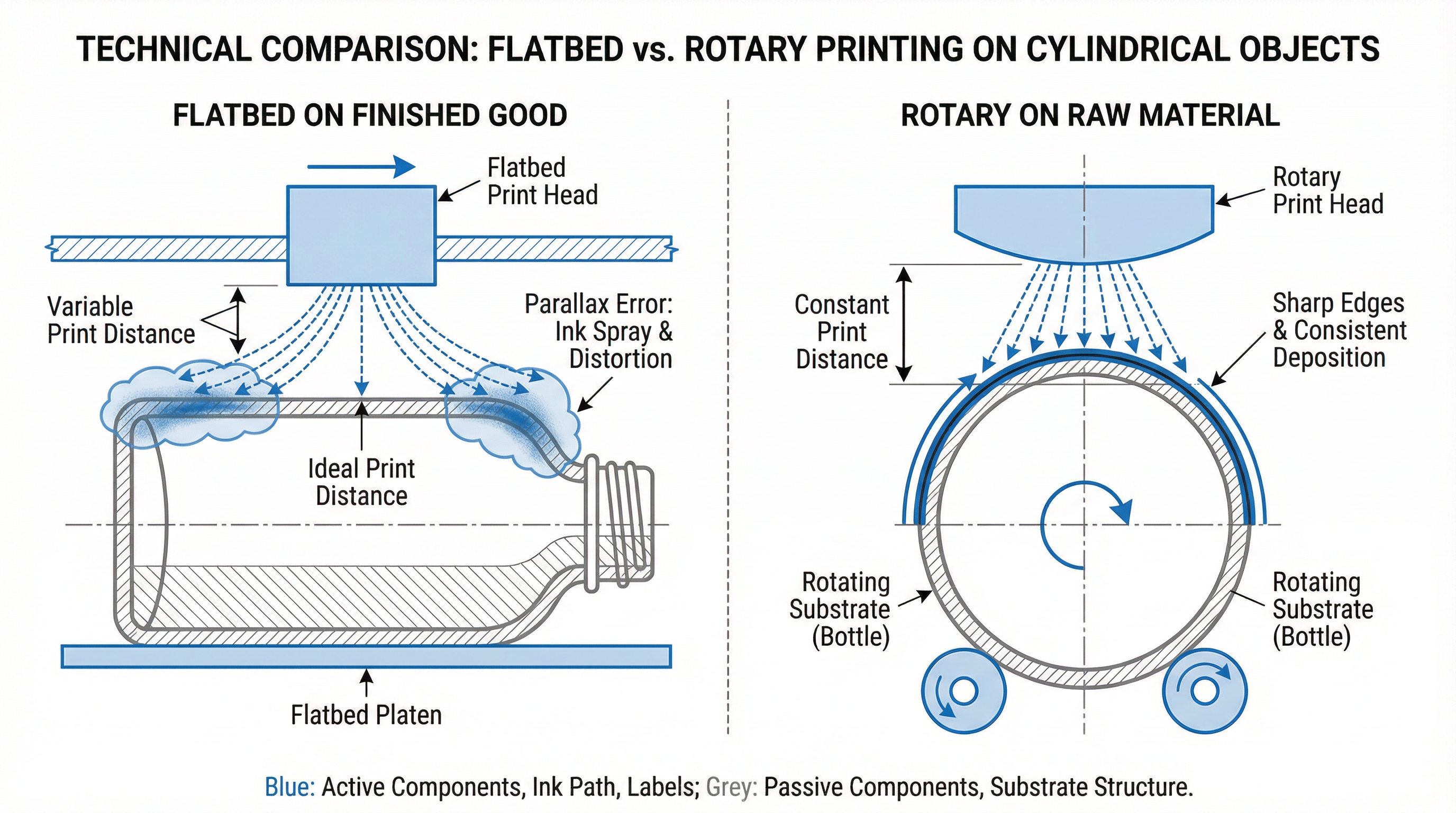
The Adhesion Barrier
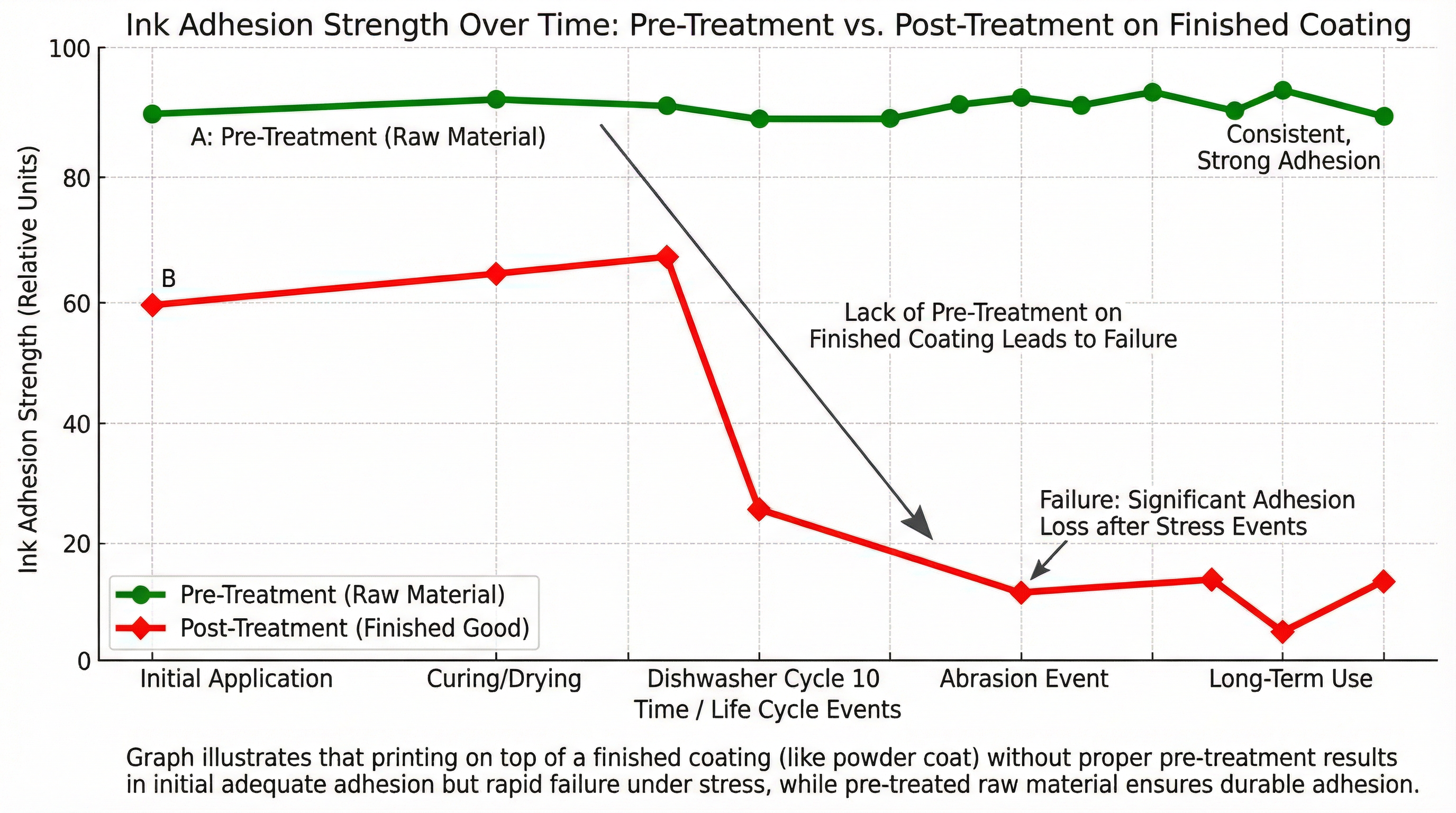
The biggest hidden risk in ready-stock customization is Surface Energy. Finished goods, especially premium tumblers or tech gadgets, are often coated with oleophobic (oil-repellent) or hydrophobic (water-repellent) layers to prevent fingerprints and stains.
These coatings are designed to reject foreign substances. Unfortunately, ink is a foreign substance.
In a Made-to-Order (MTO) workflow, we print on the raw stainless steel or plastic before the final coating is applied, or we use a specialized primer that bonds chemically with the substrate. In a Ready-Stock workflow, the printer is trying to bond ink to a non-stick coating. The result is a logo that looks fine on day one but flakes off after ten dishwasher cycles.
The "Dead Zone" Constraint
Another limitation of ready-stock printing is the printable area. On a finished bag, for example, we cannot print near seams, zippers, or handles because the print head needs a perfectly flat surface. This creates "Dead Zones"—large areas of the product that remain unbranded.
In strategic corporate gifting, maximizing brand impact often means edge-to-edge design. This is physically impossible with ready stock. You are forced into a "logo slap" approach—a small, centered logo that looks like an afterthought.
The Lead Time Illusion
Clients choose ready stock to save time. But does it?
Ready Stock Reality
- Stock check delays (inventory is fluid)
- Unpacking and repacking labor time
- High rejection rate during printing (2-5%)
- Result: Compromised quality delivered in 2 weeks.
Made-to-Order Reality
- Guaranteed material availability
- Printing happens in-line (zero extra handling)
- 100% QC on finished print before assembly
- Result: Retail quality delivered in 4-5 weeks.
In practice, this is often where production lead time decisions are misjudged. The 2-week saving comes at the cost of brand integrity. If the logo scratches off in a client's hand, the speed of delivery becomes irrelevant.
Project Manager's Advice
If your timeline allows for 4 weeks or more, always choose Made-to-Order. It unlocks full-bleed printing, guarantees adhesion, and allows for custom material colors. Reserve "Ready Stock" only for genuine emergencies, and understand that you are buying a temporary promotional item, not a durable corporate asset.