It seems like the perfect solution for a remote, global workforce: a high-end, branded "Universal Travel Adapter" or a multi-port power bank. It's useful, it has a high perceived value, and it feels modern.
However, as a Quality & Compliance Consultant, I regularly see these "perfect" corporate gifts turn into logistical disasters. The assumption that one electronic product can be legally shipped to 20 different countries is a fundamental misunderstanding of global trade compliance.
The Myth of "Global" Certification
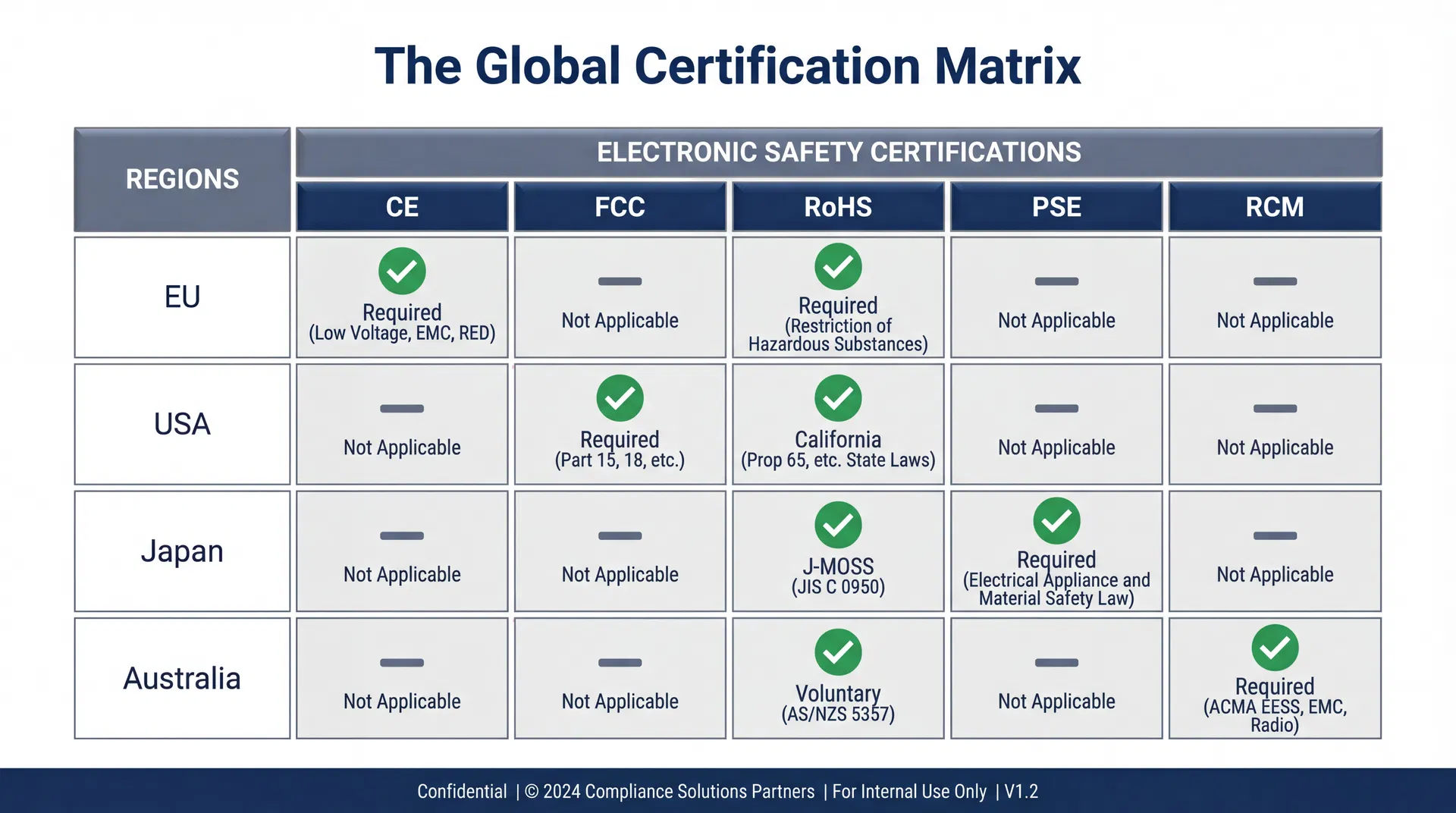
In practice, this is often where tech gift decisions start to be misjudged. A supplier will provide a "CE" mark and claim the product is certified for global distribution.
But the CE mark is only valid for the European Economic Area. If you ship that same adapter to the United States, it requires FCC certification. Ship it to Japan, and it needs a PSE mark. Ship it to Australia, and it requires RCM compliance.
The Customs Seizure Reality
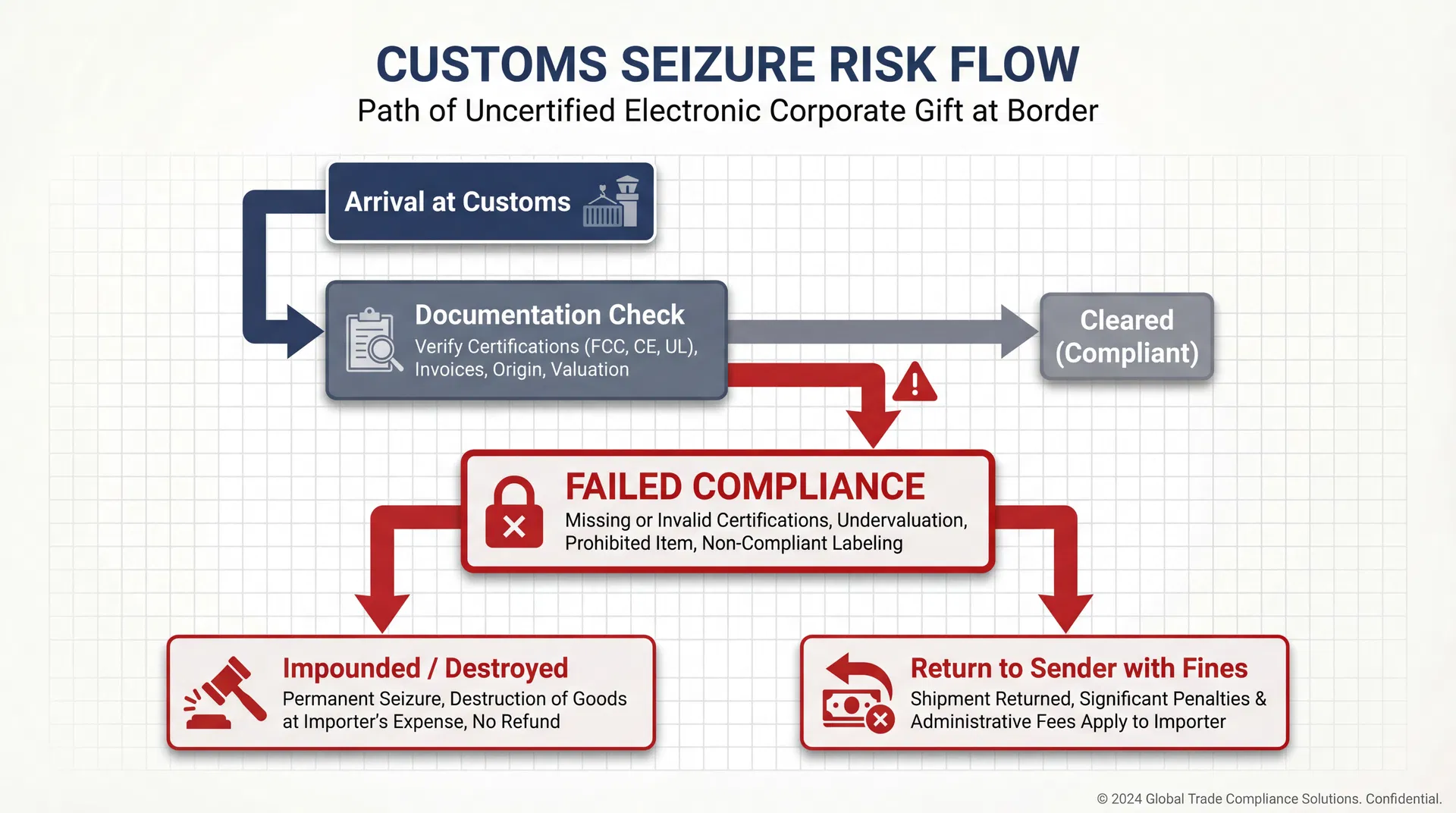
When an uncertified electronic device arrives at a foreign border, customs officials do not view it as a "harmless corporate gift." They view it as an unverified, potentially hazardous electrical component entering their grid.
If the required regional certification marks are missing from the product or the packaging, the shipment is flagged.
The Hidden Costs of Failure
When a shipment is flagged for non-compliance, the consequences cascade rapidly:
- Destruction Fees: Customs will often destroy the non-compliant goods and bill the sender for the disposal cost.
- Return Freight: If the goods are rejected rather than destroyed, you pay premium return shipping rates.
- Brand Damage: The employee receives a notice from customs that their package was seized due to "safety violations," associating your brand with cheap, dangerous electronics.
Safer Alternatives for Global Teams
- Non-Electronic Goods: High-quality notebooks, premium drinkware, or sustainable apparel bypass electronic compliance entirely.
- Regional Sourcing: Source the tech gift locally within the target region (e.g., buy CE-marked goods in Europe for European employees).
- Digital Gifts: Subscriptions, software licenses, or digital gift cards carry zero physical compliance risk.