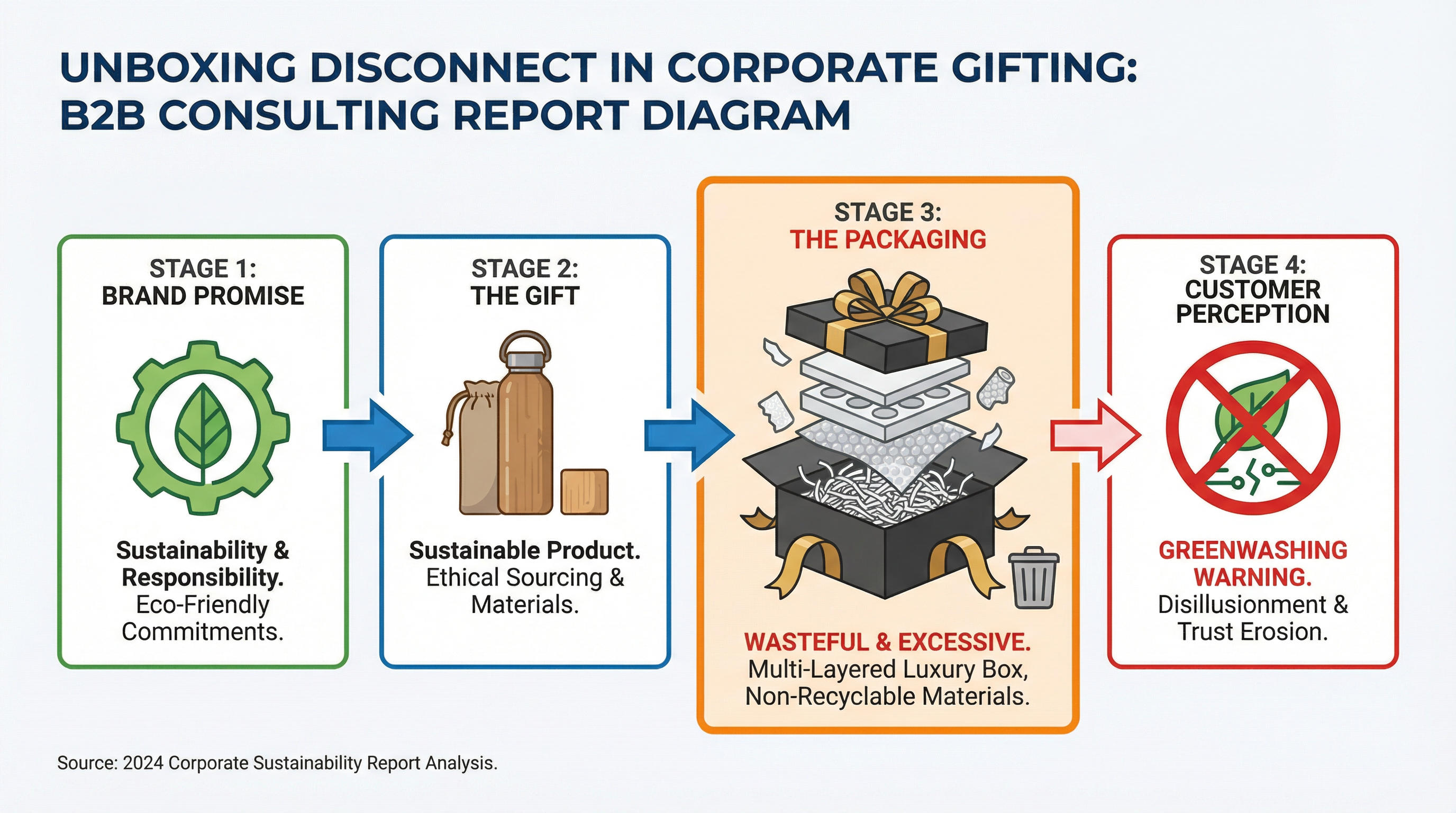
There is a specific moment of failure in corporate gifting that happens before the product is even touched. It occurs when a recipient receives a "Sustainability Award" or an "Eco-Conscious Gift Set," but has to tear through layers of plastic shrink wrap, magnetic-closure rigid boxes, and EVA foam inserts to get to it.
This is the Unboxing Disconnect. It is the immediate, visceral realization that the sender's stated values (sustainability) do not match their actual actions (wasteful packaging).
The "Premium" Trap
The root cause of this disconnect is a legacy definition of "premium." For decades, luxury has been signaled through excess: weight, layers, and volume. A heavy box meant an expensive gift.
However, in the context of modern ESG (Environmental, Social, and Governance) goals, excess signals negligence.
Redefining Premium: The "Naked" Standard
To fix the Unboxing Disconnect, companies must adopt a new standard for premium packaging: Material Honesty. This means the packaging should be as minimal as possible while still protecting the product.
The Old Standard (Avoid)
- Rigid boxes with magnetic closures (non-recyclable mixed materials)
- EVA foam inserts (petroleum-based, hard to recycle)
- Soft-touch lamination (plastic coating on paper)
The New Standard (Adopt)
- FSC-certified kraft mailer boxes (100% recyclable)
- Honeycomb paper wrap instead of bubble wrap
- Soy-based ink printing directly on the box
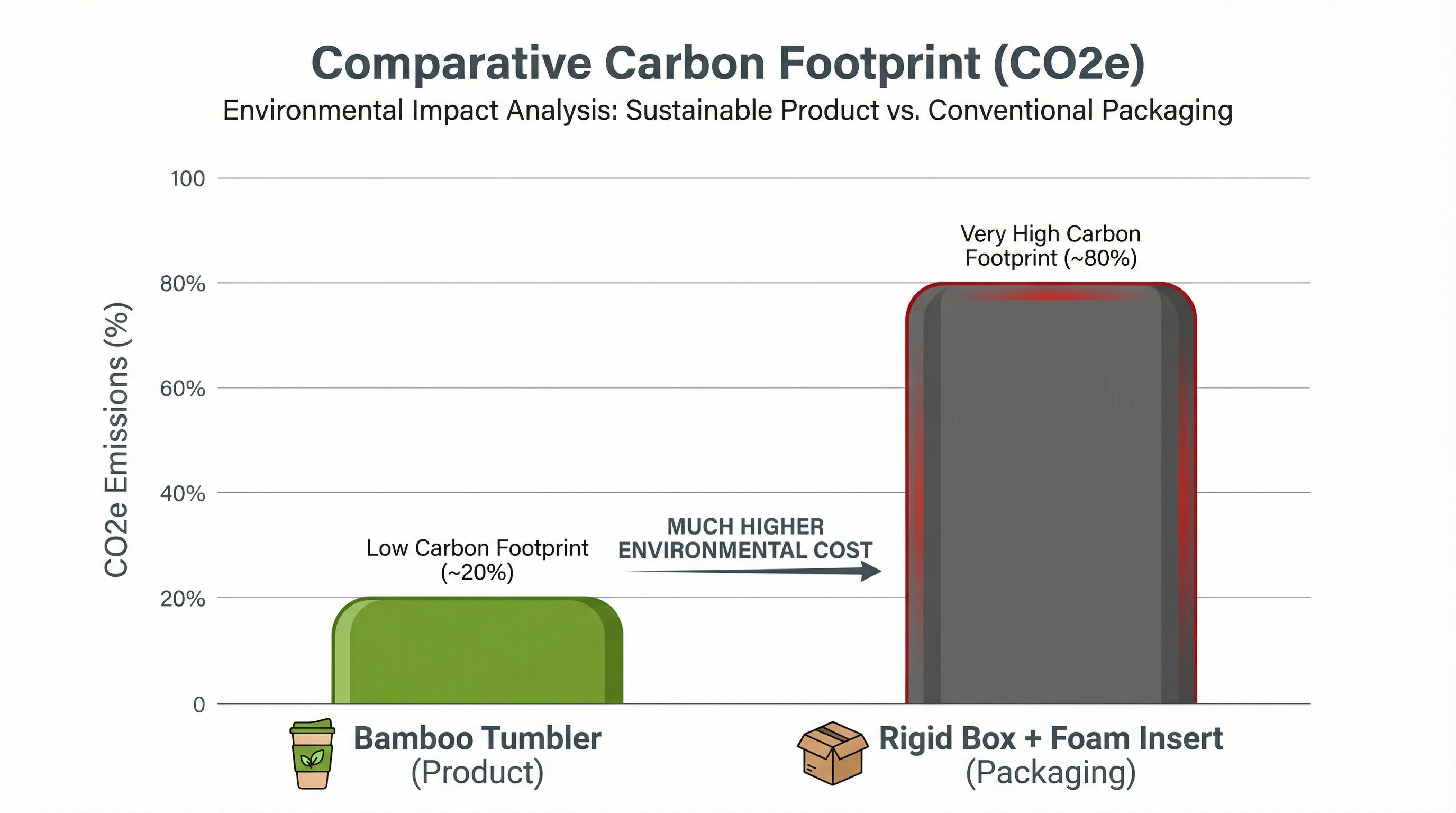
When you choose sustainable corporate gifts, the packaging must tell the same story as the product. A bamboo tumbler in a kraft box says "We care about the planet." The same tumbler in a glossy, magnetic box says "We care about appearances."
The Compliance Reality
Beyond perception, there is a regulatory reality approaching. The EU's Packaging and Packaging Waste Regulation (PPWR) and Singapore's own Resource Sustainability Act are moving towards penalizing excessive packaging.
By shifting to minimal, mono-material packaging now, you are not just improving brand perception—you are future-proofing your procurement strategy against upcoming compliance costs.