"We chose the bamboo cutlery because it saves 50g of plastic per set. Then we express-couriered each set to 500 employees' homes."
As a Senior Procurement Consultant specializing in total lifecycle analysis, I see this scenario play out every holiday season. Companies invest heavily in the product's sustainability credentials but completely ignore the distribution's carbon impact. This is what I call the "Last-Mile Carbon Leak."
The Math of Fragmented Delivery
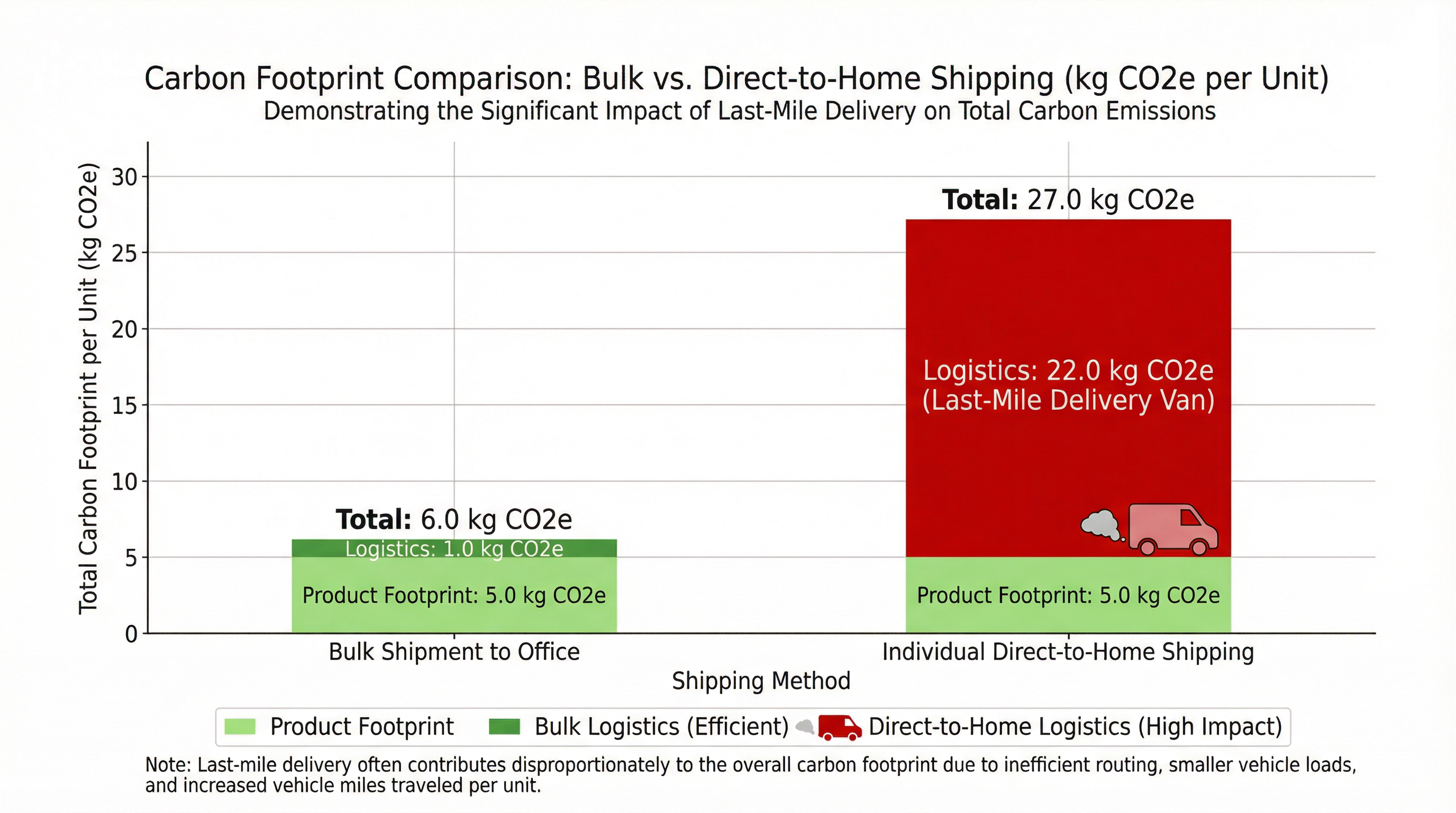
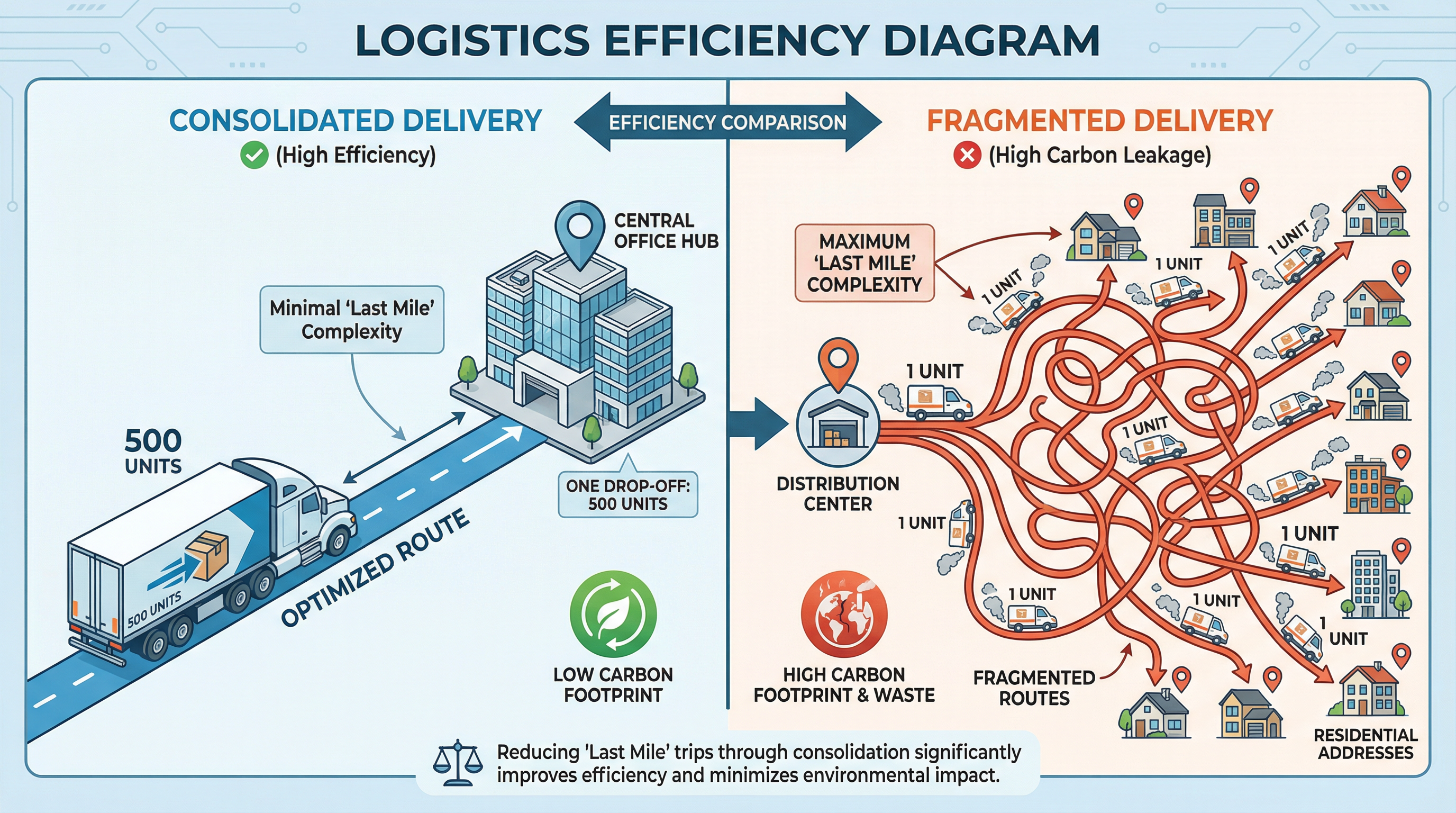
When you ship 500 units in bulk to a single office location, they travel on one pallet, in one truck. The carbon footprint per unit is negligible (often less than 0.1kg CO2e).
When you split that shipment into 500 individual parcels delivered to residential addresses, you engage 500 separate "last-mile" vehicle trips. The courier van stops, idles, accelerates, and often misses delivery, requiring a second trip. The carbon footprint per unit skyrockets, often exceeding the carbon savings of the eco-material itself.
The "Remote Work" Dilemma
With the rise of hybrid work, the "ship to home" model has become the default for corporate gifting. While convenient, it is an environmental disaster.
In practice, this is often where corporate gift selection decisions start to be misjudged. A procurement manager calculates the ROI based on the product cost and "green" material, but the logistics team books the shipping under a separate budget code. The total carbon cost is never consolidated, hiding the inefficiency.
The Packaging Multiplier
It's not just the fuel. Individual shipping requires individual shipping cartons, bubble wrap, and tape for every single unit. Bulk shipping requires one master carton for every 50 units. By choosing direct-to-home, you are voluntarily increasing your packaging waste volume by 500-1000%.
Consultant's Recommendation
To stop the carbon leak, rethink your distribution strategy:
- The "Office Collection" Event: Ship in bulk to the office and incentivize employees to pick up their gift during a team lunch. It builds culture and saves carbon.
- Hub-and-Spoke: If teams are remote, ship to regional team leads (hubs) rather than every individual home.
- Carbon-Neutral Couriers: If you must ship to homes, mandate the use of EV fleets or carbon-offset shipping options in your logistics tender.