"The sample you sent was perfect. Why does the final shipment have a 0.5mm gap?"
As a Factory Project Manager who has overseen hundreds of production runs, I hear this complaint constantly. The issue isn't that the factory "switched" quality. The issue is that the buyer fell into the "Golden Sample" trap: assuming that a single, hand-finished prototype represents the statistical reality of a high-speed assembly line.
Hand-Crafted vs. Machine-Made
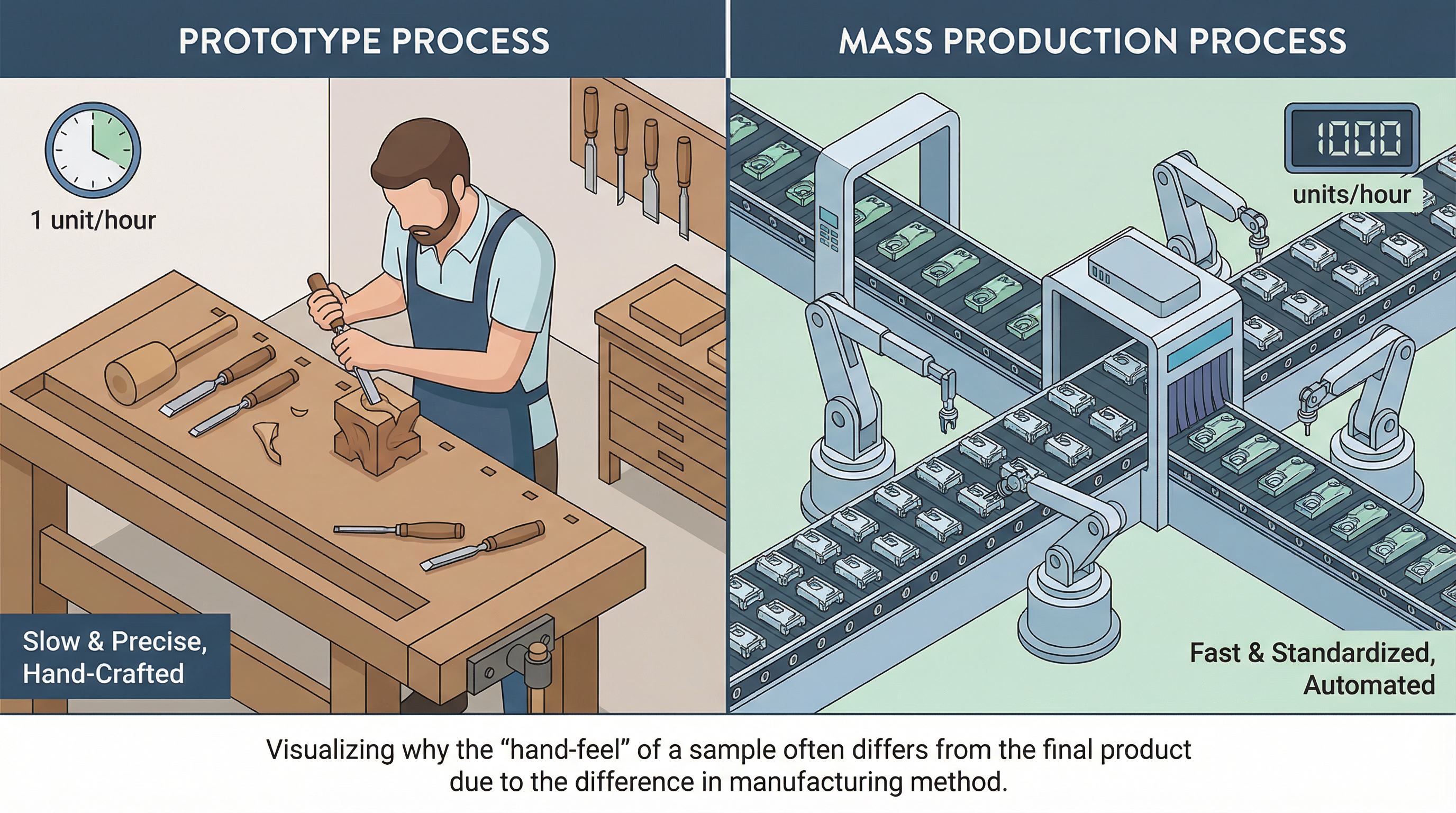
When you request a pre-production sample, my best technician makes it. They use hand tools, they work slowly, and they discard three imperfect attempts before sending you the fourth one. It is a work of art.
Mass production is different. It runs at 1,000 units per hour. The machines vibrate. The plastic molds expand as they heat up. The raw material varies slightly from batch to batch. We don't aim for a single "perfect" point; we aim for an acceptable "range."
Understanding Tolerance Drift
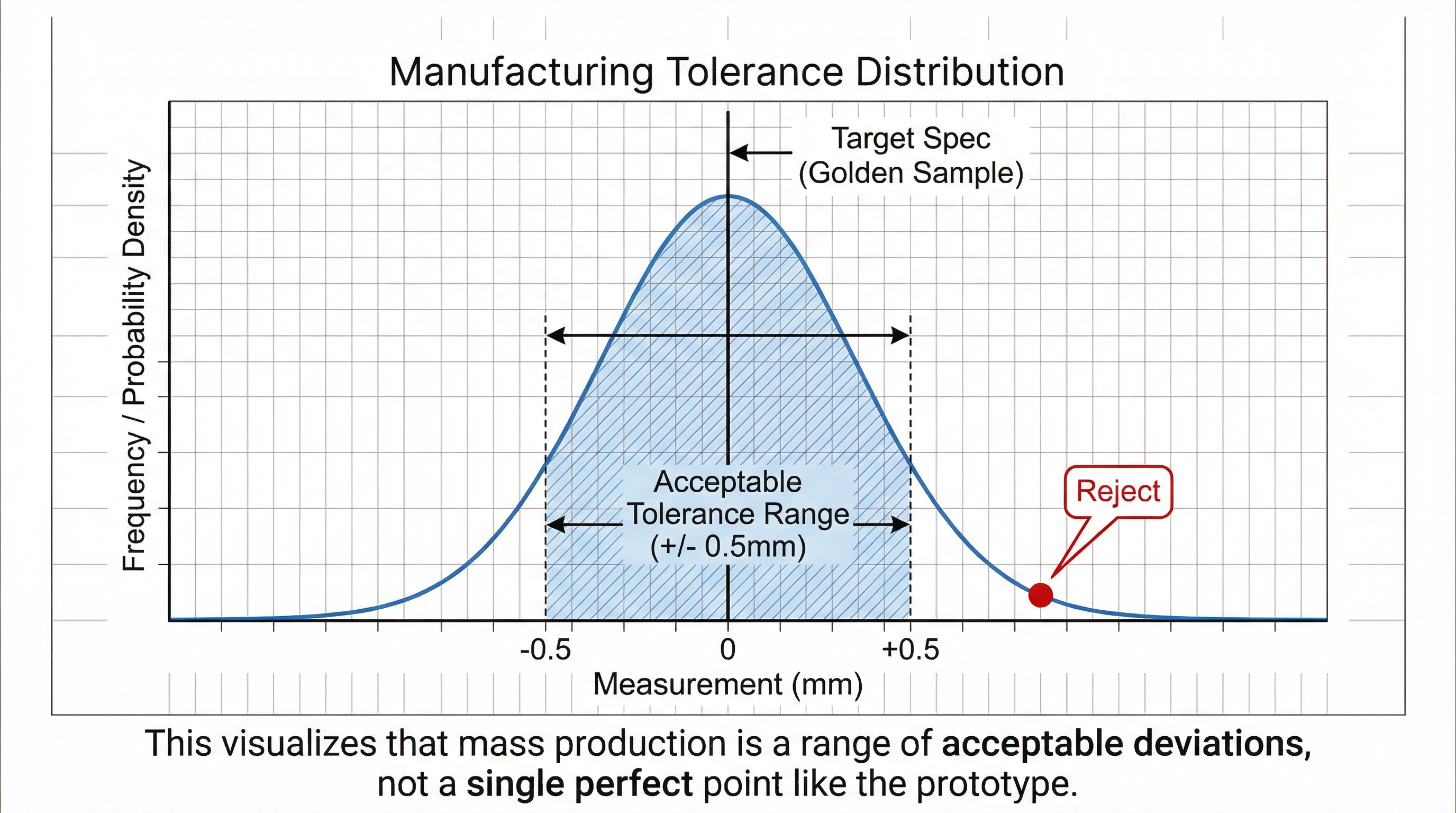
In engineering, there is no such thing as "exact." There is only "tolerance." If your spec is 100mm, the factory reads it as "100mm +/- 0.5mm."
In practice, this is often where corporate gift selection decisions start to be misjudged. A buyer measures the Golden Sample at exactly 100.0mm and expects every unit to be identical. But in mass production, unit #1 might be 99.6mm, and unit #10,000 might be 100.4mm. Both are "pass" according to the contract, but they look different from the sample.
The Risk of "Over-Specifying"
Paradoxically, demanding "zero tolerance" or "perfect matching" often leads to worse quality. If you force the factory to reject every unit that isn't perfect, they will slow down the line, increase the price by 50%, and likely hide the defects rather than fixing the root cause.
How to Approve Like a Pro
Don't just sign the Golden Sample. Instead:
- Request "Limit Samples": Ask for one sample at the upper tolerance limit and one at the lower limit. If you can accept both, you are safe.
- Define Critical vs. Cosmetic: Be strict on function (does the lid close?) but lenient on minor cosmetic variations (slight texture difference).
- Visit During Production: Or hire a third-party inspector to check the first 100 units coming off the line, not just the pre-production sample.