"But the supplier sent me an FDA certificate for the plastic. Why are you saying it's not compliant?"
As a Quality & Compliance Consultant, this is the most dangerous misconception I encounter in the corporate gift industry. Procurement teams often believe that if the ingredients are safe, the meal is safe. In manufacturing, this is false.
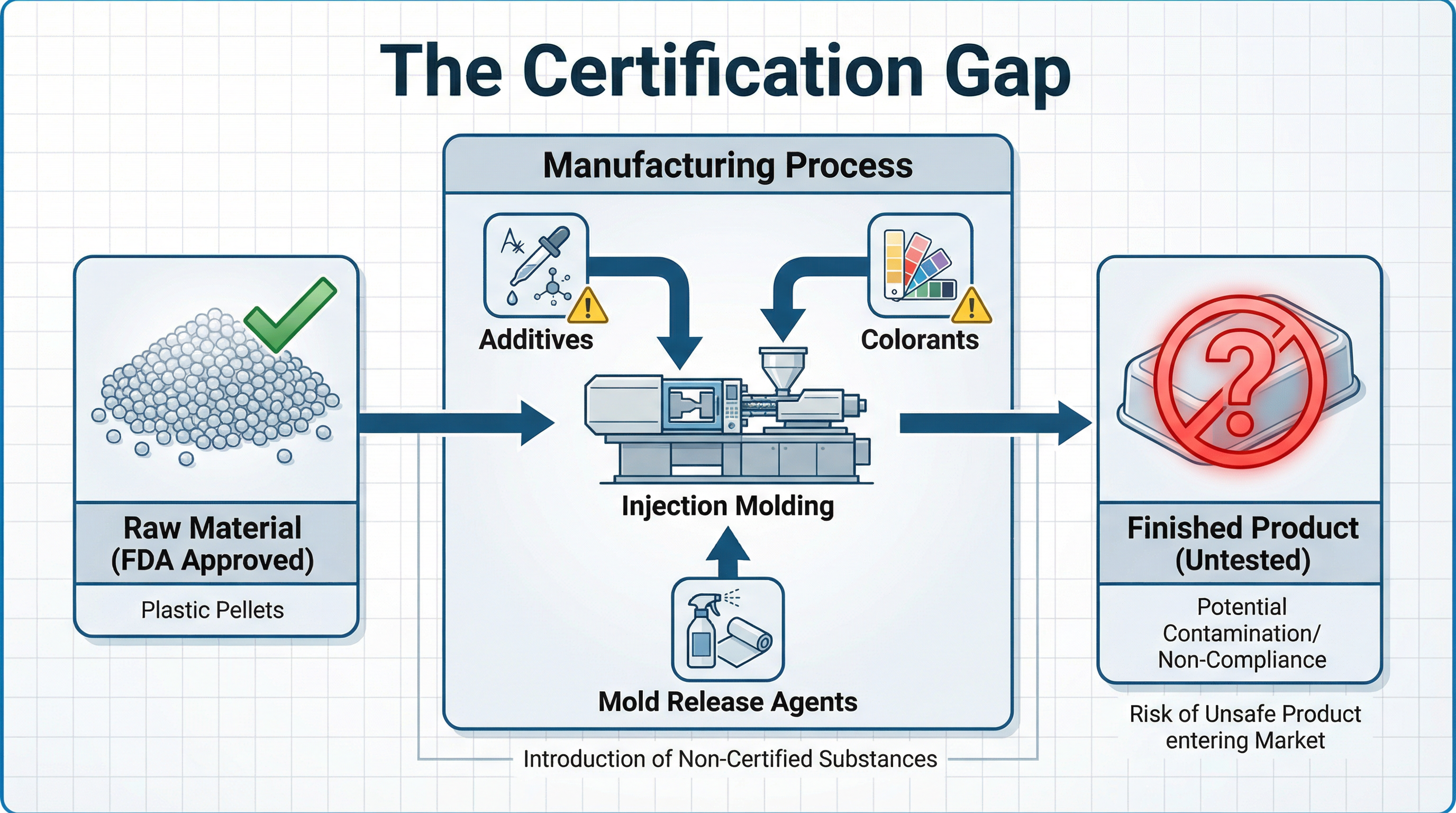
The "Pellet vs. Product" Fallacy
Most suppliers will happily provide an FDA or LFGB certificate for the raw plastic pellets (e.g., Polypropylene granules from ExxonMobil or Sabic). These pellets are indeed safe.
However, the factory doesn't just melt pellets. They add:
- Color Masterbatches: To give you that specific "Corporate Blue." Are the pigments food-grade?
- Mold Release Agents: Industrial sprays to help the plastic pop out of the machine. Are these toxic?
- Plasticizers: To make the material more flexible. Do they contain phthalates?
The Hidden Risk: Chemical Migration
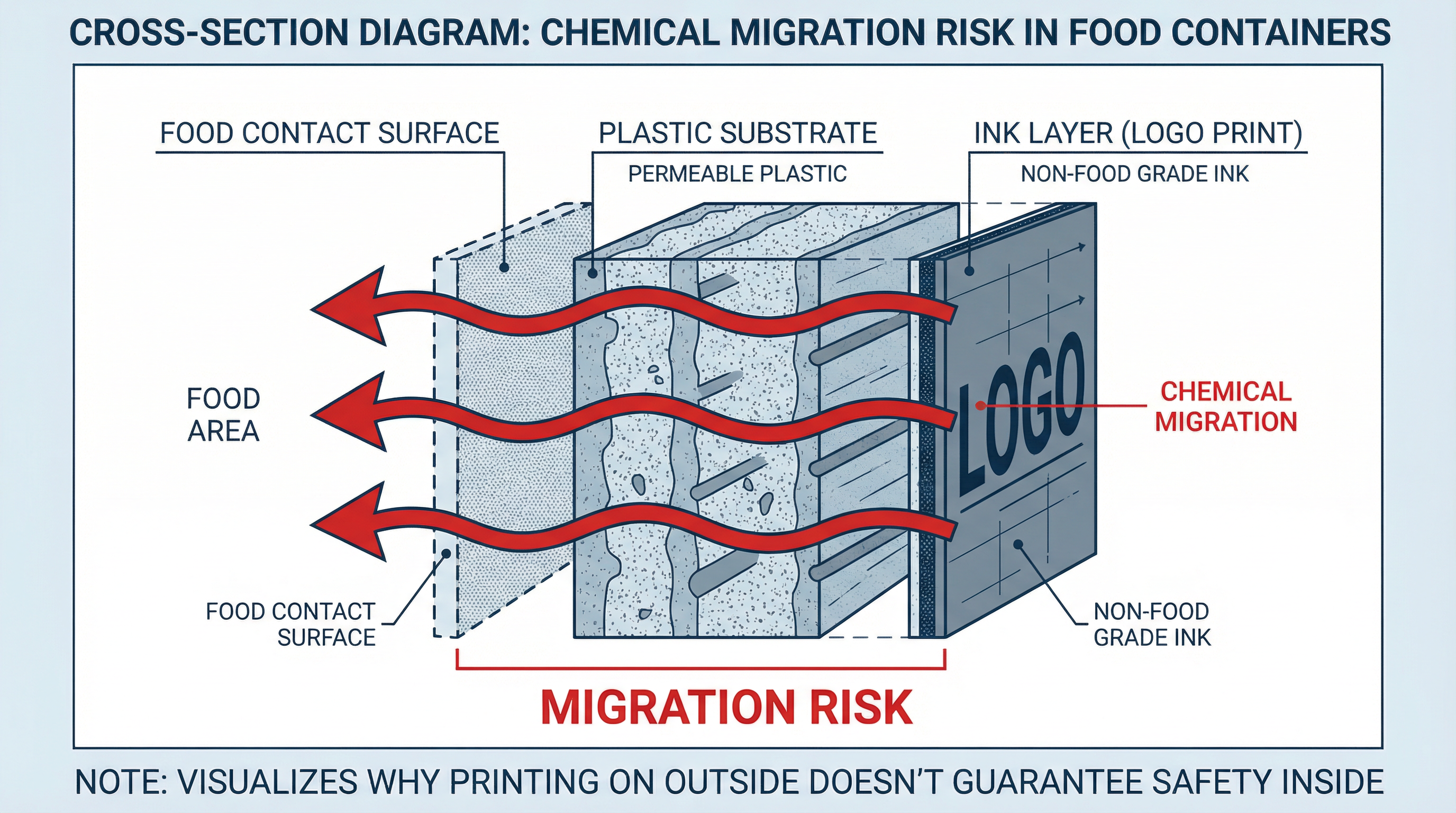
Even if the plastic body is safe, the decoration is a major vulnerability.
In practice, this is often where corporate gift safety decisions start to be misjudged. You print a logo on the outside of a lunch box. You assume it's safe because it doesn't touch the food. But at a molecular level, plastic is porous.
Migration occurs when chemicals from the ink (often containing heavy metals or solvents) seep through the plastic wall and into the food, especially when heated in a microwave.
How to Close the Gap
To protect your company from liability, you must demand the right documents. Do not accept a raw material datasheet.
The Compliance Checklist
- Finished Good Test Report: The lab test must be performed on the final product (e.g., "Blue Lunch Box with Logo"), not just the granules.
- Overall Migration Limit (OML) Test: Proves that the total amount of chemicals migrating into food is below regulatory limits (e.g., 10mg/dm² for EU).
- Specific Migration Limit (SML) Test: Checks for specific toxins like Bisphenol A (BPA) or Formaldehyde if relevant to the material.