"It's made from corn starch, so it's eco-friendly, right?" This is the most common misconception I encounter in corporate sustainability audits.
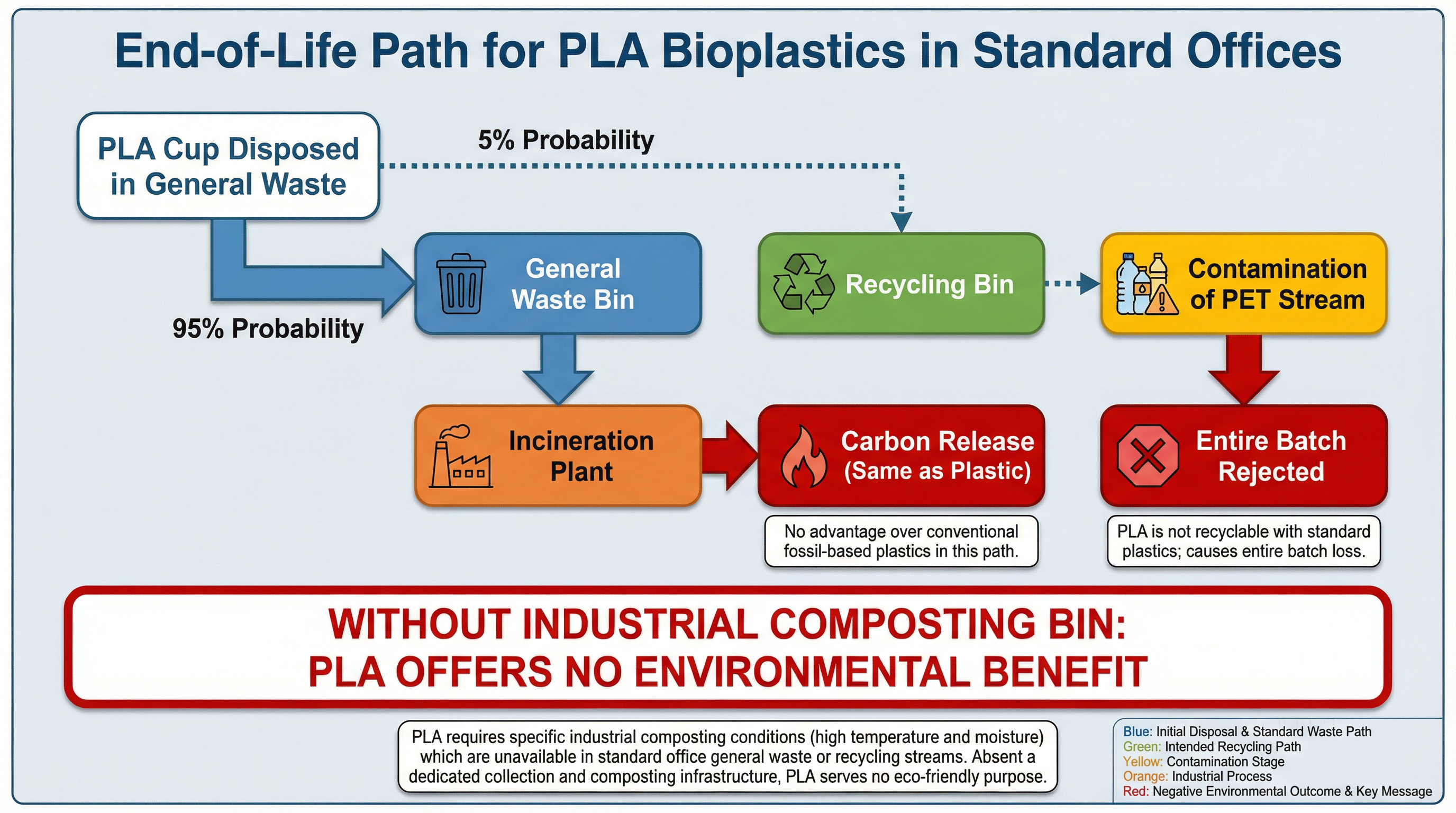
As a Quality & Compliance Consultant, I often have to deliver the hard truth: Unless your office building has a dedicated, contracted industrial composting collection service (which fewer than 5% of commercial buildings do), that "compostable" PLA cup is functionally identical to plastic. In fact, it might be worse.
The Infrastructure Gap
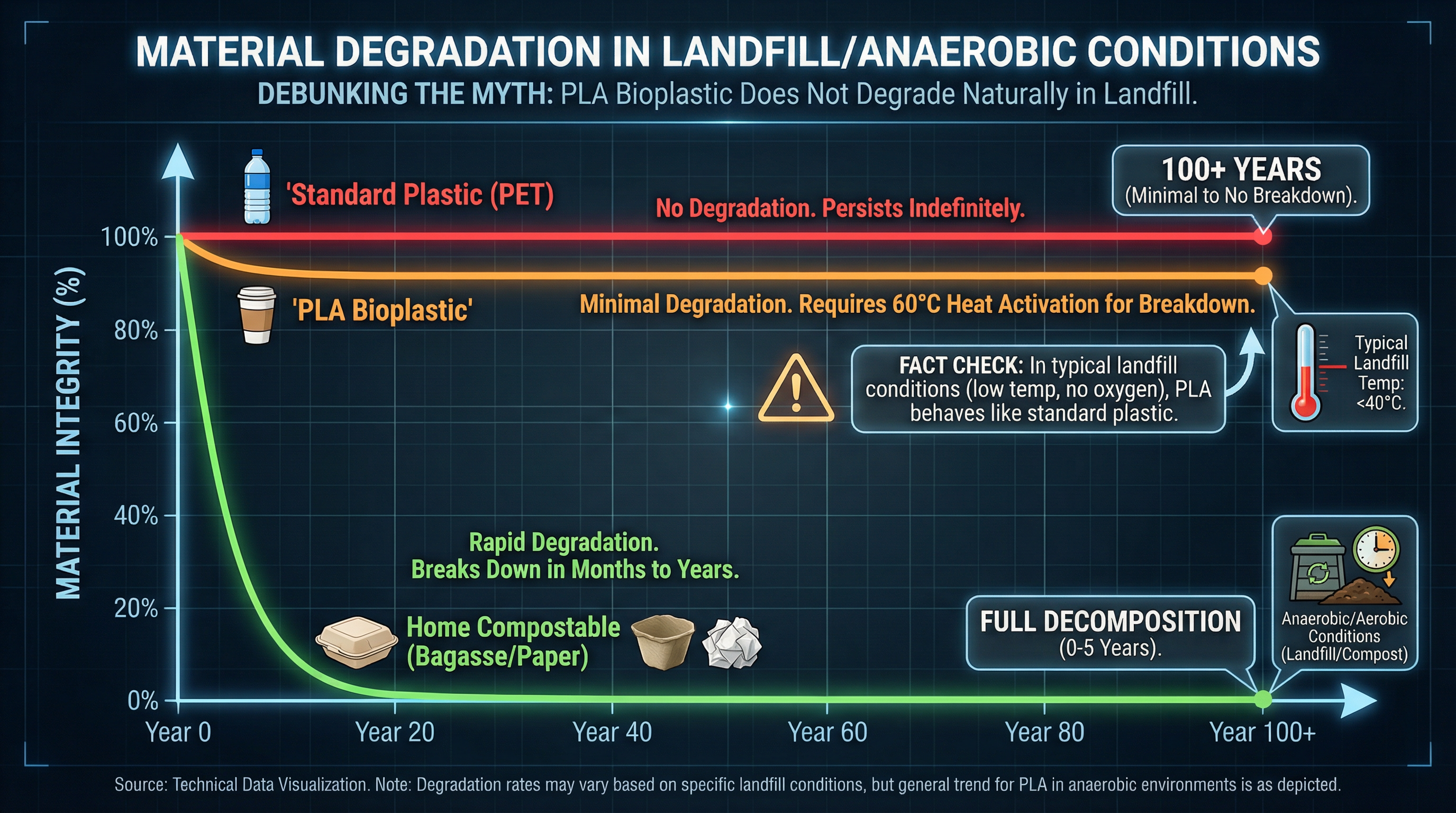
PLA (Polylactic Acid) requires specific conditions to degrade: temperatures above 60°C and high humidity, sustained for weeks. These conditions only exist in industrial composting facilities. They do not exist in a landfill, and certainly not in the ocean.
In a standard office environment, waste goes to one of two places: the general waste bin (incineration/landfill) or the recycling bin. If a PLA cup goes into the general waste, it is incinerated just like a PET plastic cup, releasing carbon. If it goes into the recycling bin, it's a contaminant.
The "Biodegradable" Myth in Landfills
Many procurement teams assume that if a PLA product ends up in a landfill, it will "eventually" break down harmlessly. This is scientifically inaccurate. In the anaerobic (oxygen-free) environment of a modern landfill, PLA remains inert for decades, similar to conventional plastic.
In practice, this is often where corporate gift selection decisions start to be misjudged. Companies pay a 30-40% premium for PLA water bottles or cutlery, believing they are "plastic-free," only to have them sit unchanged in a landfill for the next century.
The Compliance Risk
New consumer protection laws in the EU and parts of Asia are cracking down on vague "biodegradable" claims. If your CSR report claims you have "eliminated plastic" by switching to PLA, but your waste audit shows 100% of that PLA is being incinerated, you are at risk of greenwashing litigation.
The Better Alternative: Material Honesty
If you cannot guarantee industrial composting (which is true for most corporate gifts given to clients), stop buying PLA. Instead, prioritize:
- High-Quality Recycled PET (rPET): Keeps existing plastic in the loop and is widely recyclable.
- Truly Home Compostable Materials: Like bamboo, bagasse, or unlined paper, which degrade in ambient conditions.
- Durability: A stainless steel bottle used for 5 years beats any disposable cup, compostable or not.